
Analysis of EU and USA Favors for India
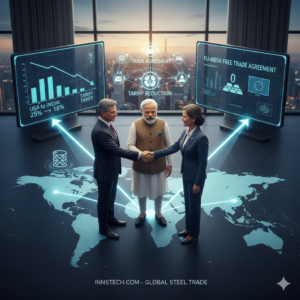
Both the United States (USA) and the European Union (EU) have implemented critical and simultaneous “improvements” (favors) for India as of February 2026. This situation clearly positions India as a strategic alternative to China in the global steel and trade arena.
1. United States: “Reciprocal Tariff” Reduction
A significant trade agreement was announced after the meeting between US President Trump and Indian Prime Minister Modi on February 2, 2026.
- Tariff Reduction: The US reduced the “reciprocal tariff” applied to Indian-origin products from 25% to 18%. In some sectors, this rate had risen to as high as 50% with punitive duties; most of these additional burdens have been removed.
- Russian Oil Condition: The biggest condition for this reduction is India’s commitment to stop or significantly reduce oil purchases from Russia. The US aims to isolate Russia and draw India into its own energy (LNG) and technology markets.
- Steel and Aluminum Exception: It’s important to note that while tariffs on textiles and engineering products have been reduced to 18%, a significant portion of the Section 232 (National Security) 50% tariffs on steel and aluminum remain in effect. However, the softening of the overall trade climate could pave the way for new quota-based exemptions.
2. European Union: Historic Free Trade Agreement (FTA)
At the end of January 2026 (approximately a week ago), the EU and India concluded long-standing negotiations, which had been ongoing since 2007, by signing a comprehensive Free Trade Agreement (FTA).
- Market Access: With the agreement, tariffs on 96% of goods going from the EU to India will be eliminated or progressively reduced. In return, India gained much more advantageous access to the EU market, particularly for industrial and automotive ancillary products.
- CBAM and Green Transition Support: While no direct exemption was granted for CBAM (Carbon Border Adjustment Mechanism), which poses the biggest threat to India’s steel sector, the EU pledged a €500 million financial support package and technology transfer to help India decarbonize its industry.
- Compensation for GSP Loss: India was removed from the EU’s Generalized Scheme of Preferences (GSP) as of January 1, 2026 (this had resulted in an additional 2-7% burden on steel exports). The new FTA compensates for this loss, providing India with a superior positional advantage over competitors (Vietnam, China).
General Analysis: Why Now?
- Balancing Against China: Both the US and the EU have chosen India as a “reliable partner” to reduce their dependence on China in supply chains.
- Supply Chain Diversification: Under the “China + 1” strategy, a carrot-and-stick approach is being used to bring India’s production capacity up to Western standards (especially in green steel and sustainability).
- Strategic Bargaining: India is using its relationship with Russia as a bargaining chip, gaining technology and market share from the West while mitigating sanction risks.
In summary: India has been declared the “new darling” of global trade at the beginning of 2026. .